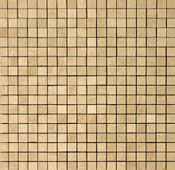
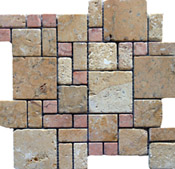
Mosaics: in art, surface decoration of small colored components--such as stone, mineral, glass, tile, or shell--closely set into an adhesive ground.
The mosaic pieces, usually small squares, triangles, or other regular shapes (called tesserae), are applied to the surface, frequently a wall or floor, which has been prepared with mortar or adhesive to receive the design.
Mosaic differs from inlay in that the pieces are applied to the surface and not inset into a recess below the surface. Each mosaic piece is small, and it is only when the piece forms part of an overall mosaic design that it takes on decorative significance.
Mosaic as an art form has most in common with painting. It represents a design or image in two dimensions.
It is also, like painting, a technique appropriate to large-scale surface decoration. Unlike the painter, however, the mosaic artist is limited in the range of colors available to him by the physical limitation of his materials.
It is difficult, therefore, to achieve the same variation of light and shadow as is possible in painting, although mosaic has qualities that render it more effective for distance effects.
The light-catching qualities of the glass tesserae used in Byzantine mosaic work, for example, as well as the elimination of the middle tones in Byzantine mosaics gave a greater brilliance than painting ever did.
Like each decorative medium, mosaic has qualities unique to itself, which lends it particular suitability to certain decorative functions.
|
 Warning: I am able to write to the configuration file: /var/www/vhosts/crazytiles.com/httpdocs/includes/configure.php. This is a potential security risk - please set the right user permissions on this file.